
University of Florida PA Program: Angelica's Acceptance Story
University of Florida PA Program: Angelica's Acceptance Story
By: Savanna Perry, PA-C
Angelica applied to three Florida programs, got two interviews, and turned those into one waitlist and one acceptance at the University of Florida. She did it with a 3.45 overall GPA, a 3.27 science GPA, a downward grade trend, a withdrawal in physics, a D+ in chemistry, and only 620 PCE hours at the time she submitted. Her advice centers on two things that cost nothing: applying early and building real relationships with the schools you want.
Last Updated: August 2, 2026
Your Pre-PA Bestie Blog - everything you need to know to become a PA in one place.
How many programs did you apply to?
3 Florida programs all near me since I could not move very far
How many programs did you interview with and what were the outcomes?
I received two interviews which ended up in 1 waitlist and 1 acceptance.
In our experience at The PA Platform, the "theme" idea Angelica describes is one of the most underrated pieces of application strategy. Admissions committees read thousands of files, and the ones they remember are the ones that resolve into a single sentence — hers was underserved care plus research. That coherence is also what lets an application survive real weaknesses. Angelica had a withdrawal, a D+, four grades in the C range, a downward trend, and PCE hours well below what most people consider competitive, and she still converted two out of three applications into interviews. Applying to three programs is riskier than we'd normally recommend, but because she was geographically limited she compensated by making herself known at every one of them.
Any red flags on your application?
I'd say the biggest red flag was my low PCE hours when I submitted my application (620 all from being a CNA), my science GPA also isn't stellar and I had a downward slope GPA wise. I did get straight As in some courses I took after college. I had a W in physics 1 course, a D+ in my first semester for chemistry 1 (retaken the following semester where I received an A-) and 3 Cs & 1 C+ (all in science courses).
Every Pre-PA Should Know...
Angelica's PCE went from 620 at submission to over 2,000 by matriculation. Programs evaluate you on the hours you report at the time you apply, but continuing to accumulate hours during the cycle strengthens you on waitlists and in updates. If your hours are thin in May, keep working — it can matter later in the cycle.
****INSERT FREE LEAD MAGNET FORM OR HTML BLOCK AND DELETE TEXT BOX*****
Anything you found surprising about interviews?
I'd say what was the most surprising is the fact that they were both very encouraging and supportive. Despite this, it is a competitive environment and you have to be on your toes prepared for all types of questions. I think after you receive an interview it is clear the school is interested in what you offer, but you need to stand out in the interview.
Were there any helpful resources (books, websites, apps) you used to get through prerequisite courses, the application or interview process?
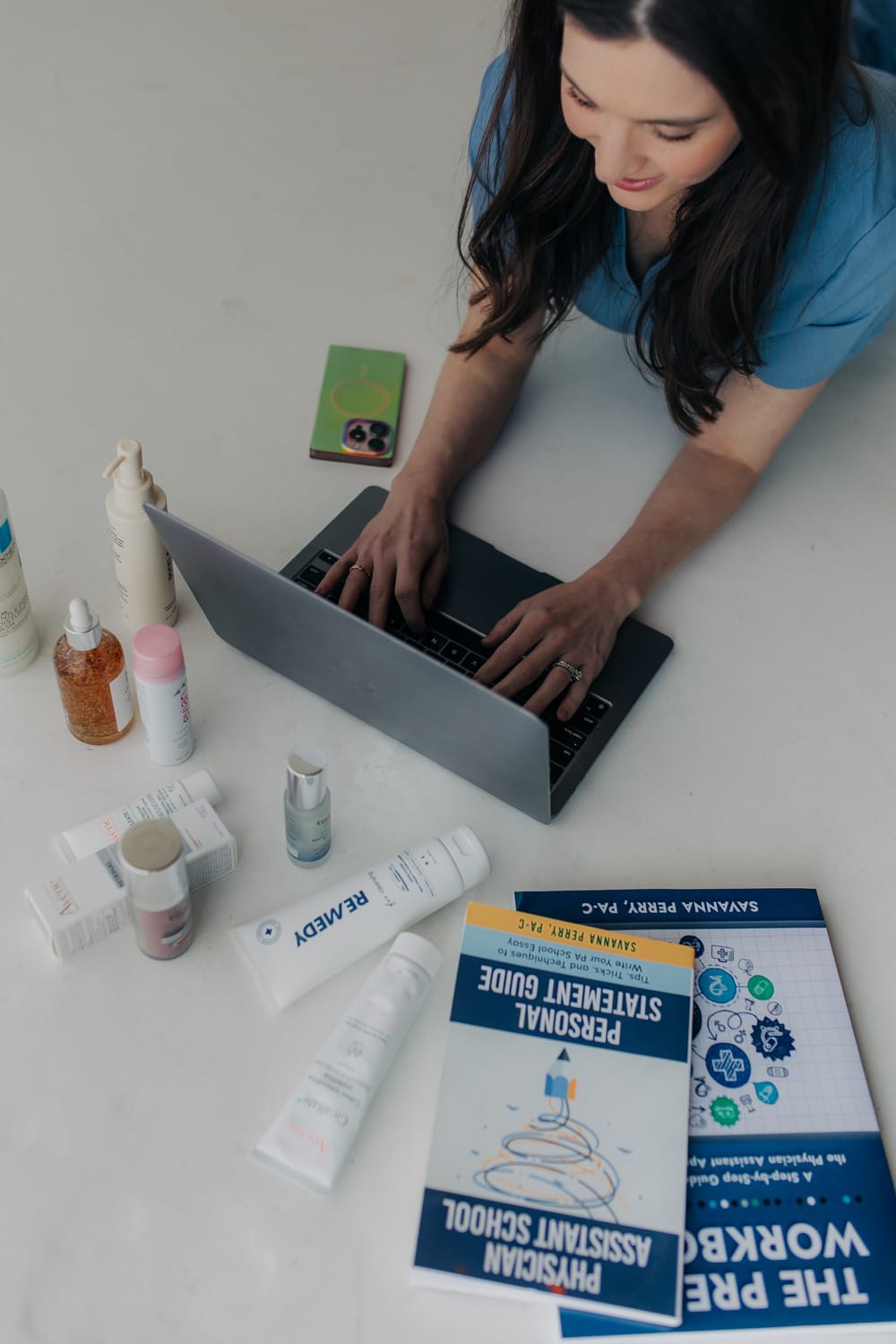
In terms of the interview, yes, I did a lot of research on different types of behavioral and straight forward questions that could be asked. I read Savanna's book and the How to Ace PA interview book which both got me in the right mindset. I was also quizzed by a PA I work with and video-taped. As far as pre-requisites, I recommend using the various resources online! I loved YouTube videos from Khan Academy, Freelance-teacher.com, Organic chemistry as a second language I & II and a few others. Learn your learning style! When it comes to applying, start reading the CASPA FAQ early, if you're applying this coming cycle, start reading it NOW, it'll make applying much simpler.
Any other advice for other pre-PA students?
Apply early (before end of May if you can help it), be in contact with your top schools. I attended open houses, asked questions, introduced myself to the admissions director, sent emails, maintained eye contact during interviews and let my confidence shine through. It is so important to be focused and determined to be admitted. Connections are vital and the earlier you make them the easier the process will be. The PA career is amazing and everyone knows it, so it is definitely getting more competitive. If you have a low GPA and low PCE hours, tailor the schools you apply to but don't let it stop you from applying to a school you love. Your personal statement is your saving grace, pour your whole heart into it. Make sure that your application has a "theme" (for example I did a lot of work with the underserved and was passionate about research, having presented at various universities) so that when someone reads through your application, they can say what you're about in a sentence. This is what makes you stand out, for PA school and any other graduate school program!
Where can we find you? (website, instagram, etc)
I recently started a website to help those who are struggling with choosing a career in health since it was something that took a lot of my time! It is easy to know you want to be in medicine, but for many it is difficult to pinpoint which career you'd like to pursue. The website is PreHealthPath.Com which offers Pre-PA advice as well.
You can also find me giving out Pre-PA & Pre-Health advice on my instagram @ angelicamaria_pa
Need to Know:
Undergraduate education: B.S in Biology from the University of Florida Class of 2017
Overall GPA: 3.45
Science GPA: 3.27
GRE: 154/154/4.5
Total HCE hours: 952 (all volunteer)
Total PCE hours: 620 at time of application, >2000 by time of matriculation (CNA, MA & now Medical Scribe)
Shadowing hours: 20
Other volunteer hours: 1237 including 1.5 year of research study
LORs: 4 letters – 1 from research professor/mentor, 1 from previous project manager from volunteering lab, 1 from nurse manager at CNA job and 1 from the executive director of clinic where I volunteered for 3.5 years. They all knew me very well except the nurse manager but I wanted a letter from someone who had seen more of my clinical side. I unfortunately did not get to shadow much by application time and did not have a PA letter.
How many times did you apply?: Once
Age: 23, I took two gap years
Gender: Female
FAQ
Angelica was accepted with a 3.45 overall GPA and a 3.27 science GPA, along with a W, a D+, and several C-range grades in science courses. Her stronger recent coursework helped offset a downward trend. [VERIFY] Confirm UF's current minimum GPA requirements.
Yes. Angelica describes her science GPA as not stellar and had a downward slope, but she took additional courses after college and earned straight As, which demonstrated an upward trajectory. Recent academic performance carries real weight when it shows improvement.
Angelica submitted GRE scores of 154 verbal, 154 quantitative, and 4.5 analytical writing. [VERIFY] Confirm whether UF currently requires the GRE, as many programs have dropped the requirement.
Angelica applied with 620 PCE hours as a CNA and identified that as the biggest weakness on her application. She reached over 2,000 hours by matriculation while working as a CNA, medical assistant, and medical scribe. [VERIFY] Confirm UF's current PCE requirements.
It increases your risk considerably, and Angelica only did it because she could not relocate. She offset the narrow list by attending open houses, introducing herself to the admissions director, and staying in contact with her top choices. If your list has to be short, that kind of direct engagement becomes essential rather than optional.
Email [email protected] or use the contact form at The PA Platform to share your acceptance story.
CLOSING
Angelica's application had almost every red flag applicants worry about — a withdrawal, a D+, multiple Cs, a downward GPA trend, and low PCE hours — and she still got in on her first attempt to a program at her own alma mater. What she did well was narrow and intentional: she built a clear theme, she showed recent academic strength, she made herself a known quantity at the schools she wanted, and she poured everything into her personal statement. If your transcript has damage on it, that combination is your path forward.
***INSERT HTML SERVICE BLOCK CTA****
You May Also Like:
How to Explain Red Flags on Your PA School Application
How to Write a PA School Personal Statement
Should You Retake a Class for PA School?
How Many PA Schools Should You Apply To?
The Pre-PA Newsletter
Real PA admissions updates, new free resources, this week's podcast, and the one thing to focus on this week of the cycle.
Your email address is safe with us .We never share your information with anyone