
University of Florida PA Program: Megan's Acceptance Story (5 C's, 3 D's, 12 Interview Invites)
University of Florida PA Program: Megan's Acceptance Story (5 C's, 3 D's, 12 Interview Invites)
By: Savanna Perry, PA-C
Megan's transcript held five C's, three D's and three withdrawals in core classes, and she was kicked out of her major twice before transferring schools. She finished her fourth and fifth years with straight A's, took harder upper-level courses instead of retaking the bad ones, and applied to nineteen programs. Twelve invited her to interview; she attended three and was accepted at all three, choosing the University of Florida.
Last Updated: August 3, 2026
Your Pre-PA Bestie Blog - everything you need to know to become a PA in one place.
How many programs did you apply to?
19. I was uncertain about where I stood as an applicant, so I applied to as many programs as possible. Looking back, I would not recommend this due to the cost of applications.
How many programs did you interview with and what were the outcomes?
I was invited to interview at 12 programs. Of the 12 invites, I attended 3 interviews and was accepted to all 3 programs.
In our experience at The PA Platform, the tracking spreadsheet Megan built is the single most underrated application tool. Nineteen programs means nineteen different prerequisite lists, supplemental applications, GRE score reports and deadlines, and things get lost. A simple sheet with a row per program and columns for requirements, submission date, materials received and status turns a chaotic cycle into a checklist. She is also right that nineteen was too many — the cost is real.
Where will you be attending?
The University of Florida
Every Pre-PA Should Know...
Megan chose not to retake the classes she did badly in, and instead took harder upper-level courses to prove she could handle the material. That is the opposite of the usual advice, and it worked — but it works only if the bad grades are not in prerequisites your programs require you to repeat. [VERIFY] Check minimum prerequisite grade rules before choosing this route.
****INSERT FREE LEAD MAGNET FORM OR HTML BLOCK AND DELETE TEXT BOX*****
Any red flags on your application?
I started college off well with a 4.0 GPA my freshman year, but my grades declined through my sophomore and junior year. In this time, my transcripts were filled 5 C’s, 3 D’s and 3 withdrawals in core classes. I ended up transferring schools after being kicked out of my major twice, however, I continued to study and finished my 4th and 5th year of undergraduate with all A’s. Instead of retaking my core classes I decided to take more challenging upper level courses to prove that I could handle the material. When I interviewed at each school I actually spoke about my low grades being one of my strengths. I explained to the interviewers why I had received those grades and how I learned and matured since then, which they all appreciated.
Anything you found surprising about interviews?
While the interviews were very professional, I was shocked at how informal they actually were. Each program I interviewed with wanted to get to know me as a person, rather than just hear my stats. I had one interviewer tell me, “the board is going to sit down in 2 weeks and decide who we accept. Tell me something that will make you stand out so when your face comes up on the slides I will remember you and want to accept you”. I decided to tell a story about me scuba diving and how I overcame one of my greatest fears. Then I related my story to their PA program and why they should accept me. This must have made me stand out because 2 weeks later I was accepted.
My advice to anyone going on interviews is, go in with a smile and showcase your personality. Every school that interviews you already knows your stats and believes that you would do well in their program. Use the time to talk about your passions, both inside and outside of health care. That is what I did, and one interviewer even thanked me for being so bright and optimistic in a setting filled with so much anxiety.
Were there any helpful resources (books, websites, apps) you used to get through prerequisite courses, the application or interview process?
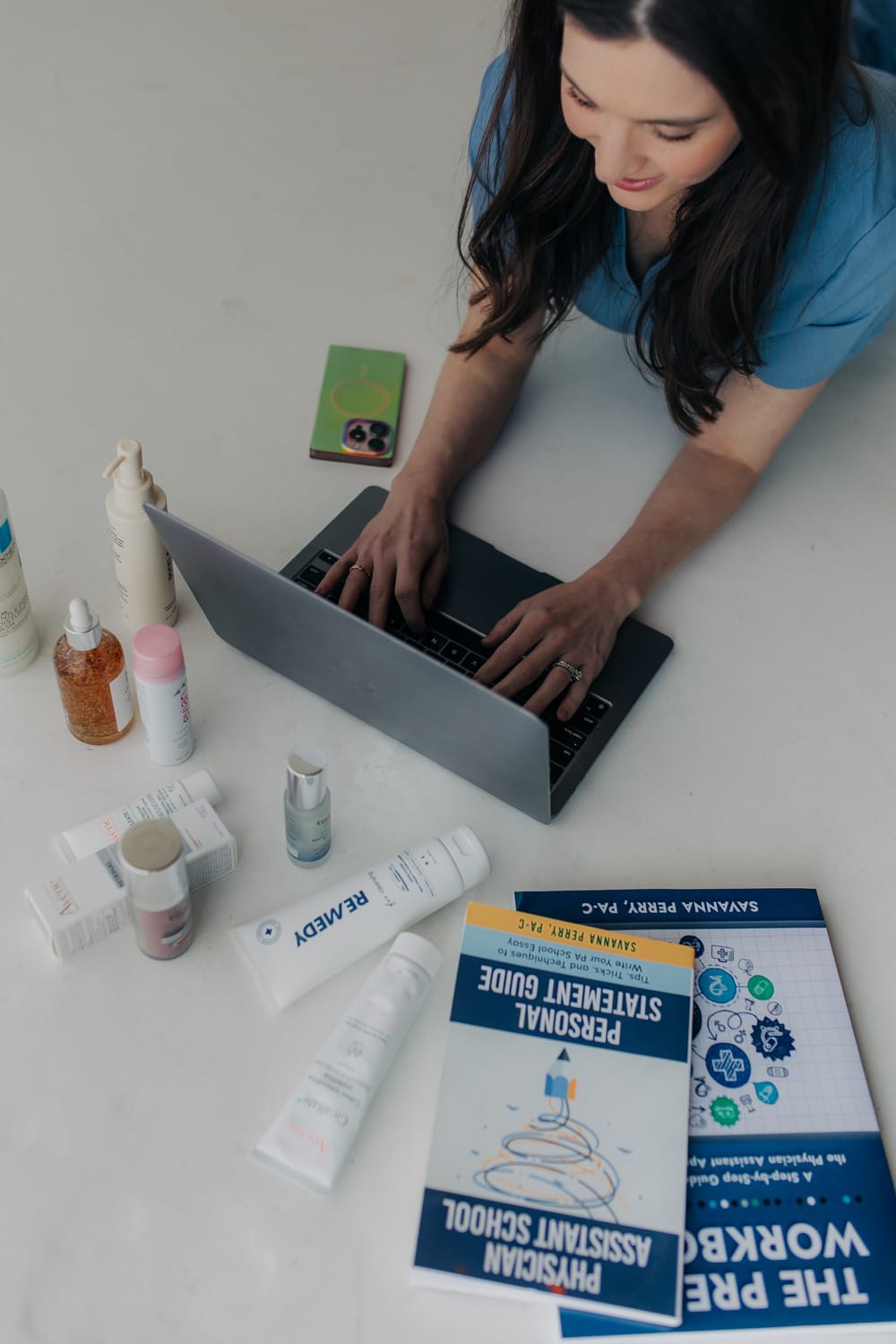
When I was getting ready to apply, I started following PA-S/PA-C on instagram. I watched their stories and YouTube videos, and I reached out to ask them any questions I had. Another resource I used was the Applicant’s Manual of Physician Assistant Programs 2018. I made an excel file of all the programs I wanted to apply to with their requirements. Throughout the application process I updated it in order to keep track of which schools received my GRE scores and supplemental applications, as well as tracked my overall application status at each program. When I was getting ready to interview I used a combination of the Physician Assistant School Interview Guide book and The Pre-PA club podcasts. Both helped me to formulate my thoughts, and allowed me to practice what I would say in the interviews.
Any other advice for other pre-PA students?
This is going to be cliché, but never give up on your dreams. When my grades were slipping my sophomore year, I had a meeting with an academic advisor who sat me down and told me that I was never going to work in the healthcare field, and that I needed to re-evaluate my life goals. I was crushed, but I didn’t listen to him and here I am 3 years later with an acceptance to the PA program of my dreams. If anyone out there is struggling with a lower GPA or GRE scores, make up for it somewhere else on your application. I became involved in research and used that to help me stand out. There are so many other ways to do this. If a program requires 2,000 PCE and 100 volunteer hours, try to double or triple it. Lastly make sure that you are involved in extracurricular activities (not just clubs, but hobbies) and include all of them on your application!
Where can we find you? (website, instagram, etc)
Instagram: _mgreener. Please feel free to reach out with any questions! I’d love to help anyone going through this stressful process in anyway that I can.
Need to Know:
Undergraduate education: Florida State University & The University of Tampa
Overall GPA: 3.48
Science GPA: 3.58
GRE: 305 (151 Verbal, 154 Quantitative, 4.0 Writing)
Total HCE hours: ~200
Total PCE hours: ~1,900 (Medical Scribe/Assistant)
Shadowing hours: ~180 (Orthopedic and Reconstructive Plastic Surgeon)
Volunteer: ~180 (Hospice, Hospital, MEDlife)
Research: ~500 (Senior thesis and Research Associate at the hospital)
Teaching: ~1250 (TA for A&P, Organic Chemistry and Ecological Physiology)
Extracurricular: Scuba diving, sorority member
LORs: 5 (2 PA, Research coordinator, 2 Professors)
How many times did you apply?: 1
Age: 24
Gender: Female
FAQ
Yes. Megan’s transcript included five C’s, three D’s and three withdrawals in core classes, and she was kicked out of her major twice, yet she received twelve interview invitations and three acceptances. She finished her final two years with all A’s and spoke about the earlier grades openly at every interview. [VERIFY] Many programs require a minimum grade of C in prerequisites specifically.
Megan chose to take more challenging upper-level courses rather than retake her core classes, arguing it proved she could handle the material. Both approaches work. Retaking is safer if the poor grade is in a required prerequisite; taking harder coursework is stronger evidence of growth if it is not.
Megan applied to nineteen and explicitly says she would not recommend it because of cost. She received twelve interview invitations and could only attend three, meaning most of that spend was wasted. Eight to twelve well-researched programs is a more efficient target.
Megan was asked exactly this and told a story about scuba diving and overcoming a deep fear, then connected it back to the program and why they should accept her. A specific personal story tied explicitly to the program is far more memorable than a list of qualifications.
It can be a differentiator. Megan credits her roughly 500 research hours, from a senior thesis and a hospital research associate role, with helping her stand out against a weaker transcript. She also logged around 1,250 teaching hours as a TA. Neither replaces patient care experience.
Email [email protected] or use the contact form at The PA Platform to share your acceptance story.
CLOSING
An academic advisor told Megan she would never work in healthcare and should re-evaluate her life goals. Three years later she had twelve PA school interview invitations and three acceptances. Her transcript never got cleaner — she just built so much around it that the story became about growth rather than grades, and then she told that story out loud in every interview room.
***INSERT HTML SERVICE BLOCK CTA****
You May Also Like:
Can You Get Into PA School With a Low GPA?
How to Explain Red Flags on Your PA School Application
How Many PA Programs Should You Apply To?
Preparing for Interviews for PA School
The Pre-PA Newsletter
Real PA admissions updates, new free resources, this week's podcast, and the one thing to focus on this week of the cycle.
Your email address is safe with us .We never share your information with anyone